The Montessori method emphasizes child-centered education, offering a holistic approach to developing the full potential of every child. This method is not merely about academic instruction but also the overall development of a child’s social, emotional, and cognitive skills. Understanding these foundational concepts is crucial for educators and parents who are considering Montessori education.
What Are the Core Principles of Montessori Education?
History and Philosophy
The Montessori education system originated in the early 20th century, initiated by Dr. Maria Montessori, an Italian physician and educator.
Dr. Montessori’s philosophy was founded on her observations of children’s natural willingness to learn and their innate curiosity. She emphasized that education should respect individuality, allowing children to explore and learn at their own pace. This philosophy stands in contrast to the conventional structured systems, advocating for a more flexible approach to education. Today, the Montessori method is implemented in schools worldwide, adapting its core principles to diverse cultural contexts.
Child-Centered Approach
One of the primary principles of Montessori education is its child-centered approach. This method prioritizes the child’s natural interests and potential, rather than strictly adhering to a predefined curriculum. In a Montessori setting, children have the freedom to choose their activities within a prepared environment, nurturing their intrinsic motivation. This approach fosters independence, as children assume responsibility for their own learning journey. Additionally, it encourages children to develop self-discipline, resourcefulness, and a love for learning.
Individualized Learning
Montessori schools focus on individualized learning, tailoring the educational experience to suit each child’s unique learning style and pace. Teachers, or guides, play a crucial role in observing and facilitating this personalized learning process, ensuring that each child engages with materials and activities that match their developmental stage. In this way, the Montessori method respects the diversity of learners, acknowledging that each child progresses differently. This tailored approach empowers children to master concepts thoroughly before moving on. As a result, children build a strong foundation of understanding that prepares them for future academic and life challenges.
Sensory-Based Learning Tools
In Montessori classrooms, sensory-based learning tools are integral to the educational process. These tools are designed to enhance children’s natural desire to explore and discover through their senses. Materials are carefully crafted to isolate different variables, allowing children to focus and refine their sensory perceptions. Engaging hands-on activities with these tools supports cognitive development and aids in grasping complex concepts. The use of sensory-based learning encourages a profound connection to the world around them, promoting critical thinking and problem-solving skills.
Mixed-Age Classrooms
Montessori schools often use mixed-age classrooms, where children of different ages learn together. This setup promotes a learning environment that mirrors real-world diversity, fostering collaboration, empathy, and mentorship among students. Older students act as role models, helping younger peers, which reinforces their own learning and leadership skills. Meanwhile, younger students benefit from observing and engaging with more advanced work and conversations, accelerating their own learning. This dynamic encourages a community of learners who respect and appreciate each other’s strengths and differences.
How Does a Montessori Classroom Differ from a Traditional Classroom?
Structure and Environment
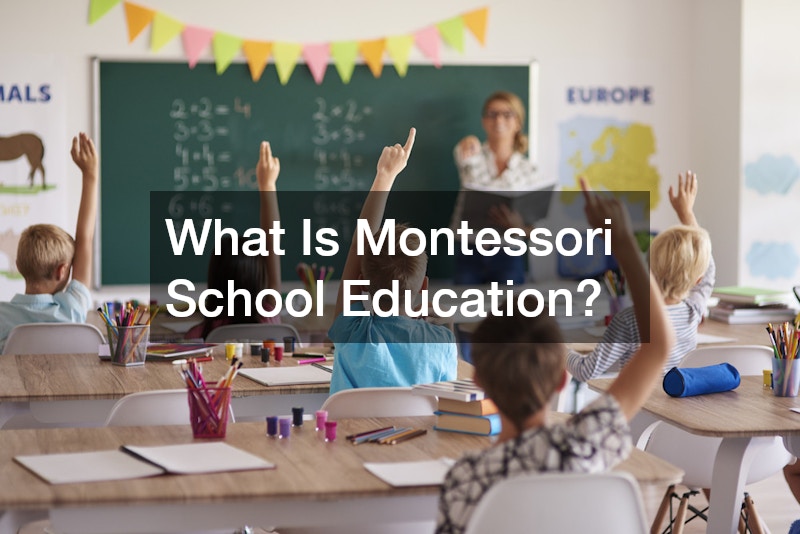
The structure and environment of a Montessori classroom significantly differ from that of traditional classrooms. Montessori classrooms are designed to be aesthetically pleasing, functional, and accessible, fostering a sense of order and calmness. Furniture and learning materials are arranged to invite exploration and independence. Unlike traditional classrooms that emphasize teacher-directed instruction, Montessori environments encourage self-directed learning, enabling students to engage deeply with their chosen activities. This physical setup reflects the Montessori philosophy of nurturing autonomy and purposeful engagement in learners.
Role of the Teacher
In a Montessori classroom, the teacher’s role evolves from directive to supportive, pivoting from instructor to guide. Teachers in Montessori schools observe and understand each student’s individual needs, providing support and guidance as they explore and interact with learning materials. This approach creates an environment where students learn to take ownership of their educational journey. Unlike traditional educators, who may lead from the front, Montessori teachers often work one-on-one or in small groups with students, adapting to each pupil’s learning pathway. Their goal is to inspire rather than instruct, fostering a nurturing atmosphere for holistic development.
Student Freedom and Responsibility
The Montessori method highlights the balance between student freedom and responsibility. Students are given the freedom to select tasks and manage their learning time, cultivating decision-making skills and accountability. This empowerment helps them develop self-discipline and responsibility for their learning. While providing autonomy, teachers also ensure students engage in meaningful and balanced activities, guiding them towards achieving educational goals. By supporting self-regulation and thoughtful choice, students learn essential skills for thriving in diverse environments beyond school.
Curriculum Design
The Montessori curriculum is designed with flexibility and breadth, focusing on interdisciplinary learning and real-world context. Unlike traditional curriculums that are often rigidly fixed, Montessori education adapts to the interests and developmental stages of students. Within this framework, children are introduced to a variety of subjects through integrated themes and projects. This approach encourages depth of understanding, connecting abstract concepts with tangible experience. The curriculum aims to develop students as whole individuals, cultivating intellectual curiosity, emotional intelligence, and social awareness.
Assessment and Evaluation
Assessment in Montessori schools differs significantly from traditional grading systems. Instead of standard tests and grades, Montessori educators use observational assessments and portfolios that capture a student’s progress over time. This method values qualitative feedback, emphasizing skills, strengths, and growth areas. Teachers maintain detailed records of each child’s work and achievements, allowing for individualized comments and suggestions. This comprehensive, reflective assessment method enables teachers, parents, and students to collaboratively celebrate accomplishments and set meaningful goals for continuous improvement.
What Are the Benefits of Montessori Education?
Development of Independence
One of the most significant benefits of Montessori education is the development of independence among students. Montessori systems are structured to encourage self-sufficiency, nurturing the ability to work autonomously. Students are responsible for managing their own learning experiences, which builds confidence and self-reliance. This empowerment extends beyond academic pursuits, equipping children with the skills to navigate various life situations independently. As they grow, Montessori students often demonstrate a remarkable sense of initiative and the capability to address challenges proactively.
Fostering Creativity
Montessori education is renowned for nurturing creativity among its students. The curriculum’s flexible, child-centered design promotes exploration and imaginative thinking, essential components for creative growth. Children are encouraged to pursue their interests, experiment with ideas, and create solutions, often in collaboration with peers. The learning environment supports and celebrates creative expression, enabling students to explore diverse perspectives and innovative problem-solving methods. As creativity is woven into the fabric of Montessori education, students are empowered to become inventive, original thinkers capable of outside-the-box solutions.
Social Interaction and Collaboration
Social interaction and collaboration are fundamental aspects of the Montessori learning experience. The mixed-age classroom structure naturally facilitates interactions among students of different ages, promoting mentorship and cooperation. Through projects, group activities, and peer learning, students develop essential social skills such as communication, empathy, and teamwork. Collaborative learning experiences foster a sense of community, where students learn to appreciate diversity and practice conflict resolution. These experiences cultivate social confidence and prepare students for effective communication and interaction beyond the classroom.
Emphasis on Practical Life Skills
Montessori education places a strong emphasis on teaching practical life skills, preparing students for real-world scenarios. Activities designed for daily living tasks, such as cooking, cleaning, and problem-solving, are integral to the curriculum. These practical experiences cultivate responsibility, organization, and time-management skills. By participating in real-life tasks, students gain confidence and understand the application of knowledge in everyday contexts. Practical life skills are considered invaluable in Montessori education, reinforcing the belief that learning should seamlessly integrate into life experiences.
Long-Term Academic Success
Research and anecdotal evidence suggest that Montessori education leads to long-term academic success. The approach’s focus on individualized learning, intrinsic motivation, and critical thinking prepares students for higher education and lifelong learning. Montessori alumni often display advanced problem-solving abilities, adaptability, and resilience in a variety of academic and professional settings. These skills are fostered through the comprehensive and holistic development cultivated in Montessori early education settings. As a result, Montessori students graduate with more than just academic skills; they possess the tools needed to thrive in an ever-changing world.
Is Montessori Education Suitable for Every Child?
Understanding the Learning Style
Determining the suitability of Montessori education for a child begins with understanding their individual learning style. Montessori methods recognize the diversity of learners, embracing visual, auditory, kinesthetic, and tactile modalities. Parents and educators must assess whether a child thrives in environments that emphasize self-paced, experiential, and hands-on learning. For some, the Montessori approach may provide the ideal challenge and engagement. However, each child is unique, and their compatibility with Montessori education may vary based on their preferences and needs.
Adapting to Child’s Needs
Montessori education is designed to adapt to the diverse needs of each child, offering an inclusive environment for varied learning abilities. Teachers work closely with students, customizing educational experiences to match developmental stages and interests. This adaptable framework allows for significant personalization, which is beneficial for children requiring more attention or specific accommodations. By embracing flexibility, Montessori education aims to engage every learner, nurturing strengths while addressing areas for growth. The adaptability of the Montessori method reinforces its commitment to honoring each child’s uniqueness.
Parental Involvement
Parental involvement is a crucial component of Montessori education, playing a significant role in a child’s successful learning journey. Montessori schools often encourage parents to actively participate in their child’s education through communication, volunteering, and community activities. Engaged parents help reinforce Montessori principles at home, supporting consistent learning and development. This involvement enhances the home-school connection, nurturing a supportive network that benefits a child’s holistic growth. By being informed and involved, parents contribute to creating an enriching educational experience aligned with family values.
Age and Developmental Stages
Another consideration for Montessori education is the child’s age and developmental stage. Montessori methods are particularly beneficial for early childhood education, where foundational skills and independence are cultivated. The flexible approach continues to benefit older age groups, though parents must evaluate if the philosophy aligns with their child’s maturity and readiness. Transitioning at various developmental stages may present opportunities or challenges, depending on the child and environment. Evaluating developmental compatibility can help parents make informed decisions about timing and the continuity of Montessori education.
Consideration of Special Needs
Montessori education provides an inclusive framework that can accommodate children with special needs, though thorough evaluation is essential. The approach’s adaptability and individualized learning opportunities make it feasible for diverse learners, including those with learning differences. With trained educators and appropriate support, Montessori environments can create rich learning experiences for children requiring additional resources. However, parents should carefully assess the resources and expertise available at specific Montessori schools to ensure their child receives the necessary support. Collaboration between teachers, specialists, and families is key to addressing special needs effectively within a Montessori setting.
How to Choose the Right Montessori School?
Accreditation and Standards
Choosing the right Montessori school involves evaluating various factors, including accreditation and standards. Reputable Montessori schools adhere to standards set by international organizations, ensuring consistency in the delivery of authentic Montessori education. Accreditation processes involve rigorous assessments of the school’s philosophy, curriculum, faculty training, and facilities. Parents should inquire about the school’s accreditation status, aligning their choice with institutions that meet high-quality standards. Recognized accreditations provide assurance of the school’s commitment to maintaining the integrity of Montessori principles and methodology.
Teacher Qualifications
The qualifications and experience of Montessori teachers are pivotal in delivering effective education. Teachers in Montessori schools should possess specific certification in Montessori pedagogy, gained through recognized training programs. A well-trained Montessori teacher understands the nuances of the educational approach and is equipped to foster a rich learning environment. When evaluating schools, parents should inquire about teachers’ credentials, experience, and ongoing professional development. Highly qualified teachers contribute significantly to the school’s ability to offer an authentic, impactful Montessori experience to all students.
Environment and Facilities
The learning environment and facilities are critical factors when selecting a Montessori school for your child. An ideal Montessori setting offers a well-organized, child-centric environment that promotes exploration, independence, and comfort. Facilities should provide access to a variety of Montessori materials, spacious learning areas, and safe outdoor spaces. Parents should visit potential schools to observe classrooms in action and gauge how the environment accommodates diverse learning needs. The quality of facilities reflects a school’s commitment to providing a stimulating, supportive educational experience.
Community and Values
The sense of community and shared values within a Montessori school are important considerations for many families. A strong school community fosters collaboration, engagement, and a supportive atmosphere for students and parents alike. Parents should look for schools whose values align with their own, creating a cohesive environment where students thrive. Involvement with the school community through events, volunteer opportunities, and open communication enhances the educational experience. A supportive, value-oriented community can significantly enrich a child’s Montessori education, reinforcing family beliefs and aspirations.
Feedback from Parents and Alumni
Gathering feedback from current and former parents and alumni provides valuable insights when choosing the right Montessori school. Reviews, testimonials, and experiences shared by families offer perspectives on school culture, effectiveness, and student success. Engaging in conversations with alumni may reveal long-term impacts of Montessori education and how it has shaped their achievements and worldview. Such firsthand accounts can guide decisions by illuminating strengths and areas of improvement within potential schools. Informed choices are often facilitated by the experiences and reflections shared by the school community.
Montessori education offers an alternative approach that cultivates independent, creative, and lifelong learners. By understanding its core principles and assessing the suitability for your child, you can make an informed decision about whether this educational model aligns with your family’s values and your child’s needs. Montessori methods emphasize the holistic development of children, nurturing their potential through thoughtful, personalized learning experiences. As education continues to evolve, Montessori schools remain a distinctive option, inspiring students to become engaged, curious, and empathetic individuals. Whether considering Montessori for early childhood or beyond, this educational approach provides a foundation for personal growth and academic success.